

Study Finds ChatGPT and Gemini Misjudge Their Own Communication Style
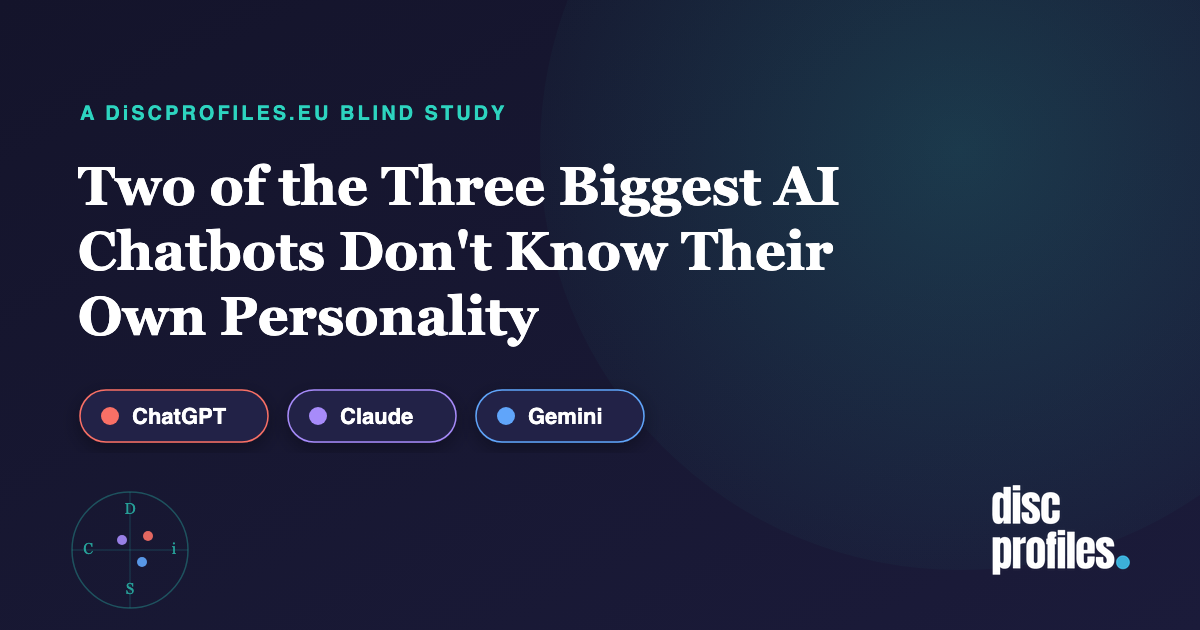
Blind DiSC-based ratings found a mismatch between self-described and observed communication style for two of three major AI chatbots.
AMSTERDAM, NETHERLANDS, September 8, 2026 /EINPresswire.com/ -- A new exploratory study by DiSCprofiles examined whether the communication style that major AI chatbots attribute to themselves matches how their actual responses are perceived by independent human raters.
The study compared ChatGPT, Claude and Gemini across realistic workplace communication scenarios. When asked to characterize their own DiSC-related communication style, all three gave broadly similar answers. Each described itself as mainly careful, structured and accommodating, with assertiveness or expressiveness appearing more as a situational adjustment than a default style.
Researchers then tested those self-descriptions against the chatbots’ actual writing.
The broader study collected 132 responses across twelve workplace scenarios, including handling an unrealistic deadline, responding to blunt feedback, choosing under incomplete information and announcing a successful team result. The models were tested using their default consumer configurations, with memory and personalization switched off.
For the blind-rating stage, 15 message drafts were anonymized and randomized. Three independent certified DiSC consultants evaluated them without knowing which AI system had written each response.
The raters scored every message for directness and task-versus-people focus and selected the closest DiSC behavioral style.
Claude was the only model whose observed style broadly matched its self-description.
ChatGPT showed the largest difference. It described itself as primarily C/S or S/C, associated with a more careful and accommodating communication pattern. However, blind raters gave ChatGPT the highest mean Directness score of the three models, 3.60 out of 5, and the highest task-focus score, 3.33. Dominance received the largest number of DiSC style votes for ChatGPT.
Gemini also differed from its own description. Although it described itself as a C/S blend, blind raters most often selected the influence style, reflecting a more expressive and informal communication pattern.
"People increasingly use AI to help with difficult messages, feedback and workplace conversations," said Uku Soot of DiSCprofiles. "We wanted to see whether the way these systems describe their own communication style matches the impression their responses create. For two of the three systems, it did not."
The study also found clear differences in the models’ written behavior. ChatGPT responses were substantially shorter on average than those from Claude and Gemini. Gemini used more exclamation marks and the least hedging, while Claude used no exclamation marks in the balanced comparison sample.
The researchers stress that the study does not suggest that AI systems possess human personalities. DiSC was used as a structured framework for classifying observable communication patterns in generated text.
The findings may be relevant for people using AI in leadership development, coaching, learning, HR, customer communication and other situations where tone and interpersonal style affect how a message is received.
The full study, methodology, results and practical implications are available at:
https://discprofiles.eu/two-of-the-three-biggest-ai-chatbots-dont-know-their-own-personality
Uku Soot
DiSCprofiles
email us here
Legal Disclaimer:
EIN Presswire provides this news content "as is" without warranty of any kind. We do not accept any responsibility or liability for the accuracy, content, images, videos, licenses, completeness, legality, or reliability of the information contained in this article. If you have any complaints or copyright issues related to this article, kindly contact the author above.
